The healthcare industry is rapidly evolving, creating exciting career opportunities for skilled professionals who support patient care behind the scenes. One such profession is medical coding, a vital process that ensures healthcare providers receive accurate reimbursements while maintaining organized patient records. If you are planning to build a stable and rewarding career in healthcare, understanding what medical coding is is essential. A Beginner’s Guide is the perfect place to start.
At MediInfo Tech, we help aspiring healthcare professionals gain the knowledge and practical skills needed to excel in medical coding. Our comprehensive training programs are designed for pharmacy graduates, nursing professionals, biotechnology students, life sciences graduates, paramedical students, and fresh graduates who want to enter the healthcare industry. With industry-oriented training, practical exposure, and placement assistance, we prepare students for Successful Careers in Medical Coding and related healthcare domains.
Understanding Medical Coding
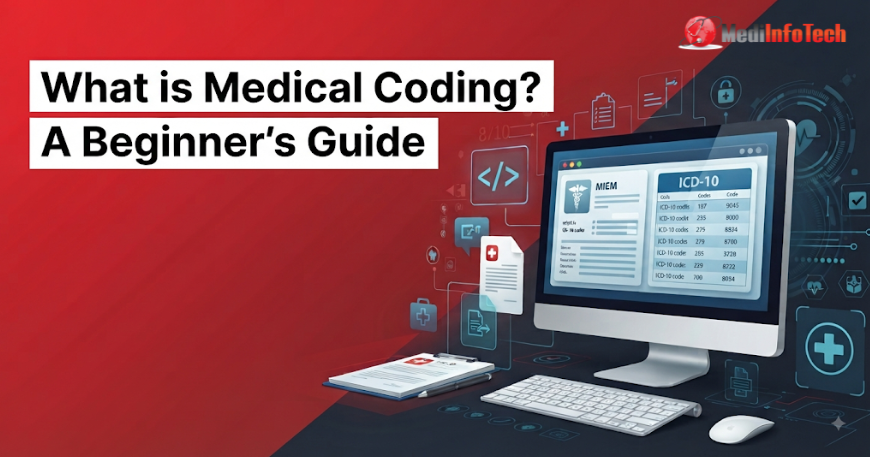
Medical coding is the process of converting a patient’s medical diagnoses, treatments, laboratory reports, surgical procedures, prescriptions, and healthcare services into standardised alphanumeric codes. These codes provide a common language that healthcare providers, insurance companies, and government organisations use to communicate accurately and efficiently. Every time a patient visits a hospital, clinic, or diagnostic centre, physicians document the diagnosis, symptoms, procedures, medications, and treatment plans. Medical coders carefully review these records and assign standardised codes using internationally accepted coding systems such as ICD (International Classification of Diseases), CPT (Current Procedural Terminology), and HCPCS (Healthcare Common Procedure Coding System).
The use of standardised codes minimises errors, improves communication among healthcare providers, and ensures that insurance companies process claims accurately. Medical coding has become an indispensable part of the healthcare revenue cycle because every consultation, surgery, laboratory investigation, or treatment depends on proper documentation and coding. Understanding What Is Medical Coding? A Beginner’s Guide helps aspiring professionals appreciate how medical coding contributes to improving healthcare efficiency and maintaining accurate patient information across healthcare systems.
Why Medical Coding is Essential in Healthcare
Medical coding is much more than simply assigning codes to medical records. It serves as the backbone of healthcare administration by ensuring that every medical service is documented correctly and reimbursed appropriately.
Healthcare providers depend on accurate coding to receive timely payments from insurance companies. Incorrect coding can lead to delayed reimbursements, rejected claims, financial losses, and compliance issues. Proper medical coding reduces administrative errors and supports efficient hospital operations, making it an essential skill for professionals seeking a Top Medical Coding Training Course. Beyond billing and insurance, medical coding helps maintain complete electronic health records, improving patient care.
How Medical Coding Works
The medical coding process follows a structured workflow that requires both technical knowledge and attention to detail. Every stage is essential for maintaining accurate healthcare documentation and ensuring proper reimbursement. The process begins when a patient receives medical treatment. Physicians and healthcare professionals prepare detailed clinical documentation describing the patient’s condition, symptoms, diagnosis, procedures performed, medications prescribed, and follow-up recommendations. Medical coders review these clinical records carefully to identify all reportable diagnoses and procedures. Using official coding manuals and current healthcare guidelines, they assign appropriate ICD, CPT, and HCPCS codes that accurately represent the medical services provided.
Once coding is completed, every assigned code is verified for accuracy and compliance with healthcare regulations. The coded information is then submitted to the medical billing department, where insurance claims are prepared and processed. Accurate coding reduces claim denials, improves reimbursement timelines, and helps healthcare organisations maintain financial stability while ensuring patients receive correct billing statements.
Skills Required to Become a Medical Coding Professional
Medical coding is an excellent career choice for individuals who enjoy working with healthcare information and possess strong analytical abilities. Since every patient record is unique, coders must interpret medical documentation carefully and apply coding guidelines accurately. Successful medical coders develop a strong understanding of anatomy, physiology, medical terminology, pathology, pharmacology, and healthcare regulations. They also require excellent computer skills because modern healthcare organisations rely heavily on electronic health record systems and digital documentation.
Attention to detail is one of the most important qualities in this profession. Even a minor coding error can affect insurance claims, reimbursement, or patient records. Strong communication skills, logical thinking, and continuous learning are equally valuable because healthcare coding standards are regularly updated. Professional training equips students with both theoretical knowledge and practical coding experience, enabling them to confidently handle real-world healthcare documentation.
Medical Coding Certifications That Boost Your Career
Professional certification demonstrates your expertise and significantly improves your employability within the healthcare industry. Certified professionals are preferred by hospitals, healthcare organizations, insurance companies, medical billing firms, and multinational healthcare BPOs because certification validates technical knowledge and coding accuracy. At MediInfo Tech, students receive comprehensive preparation for globally recognized certifications, including CPC (Certified Professional Coder), COC (Certified Outpatient Coder), CIC (Certified Inpatient Coder), CCS (Certified Coding Specialist), and CRC (Certified Risk Adjustment Coder).
Each certification focuses on different aspects of medical coding and opens opportunities across various healthcare specialties. Our experienced trainers combine classroom instruction with practical case studies to help students understand coding guidelines, documentation standards, and real-time healthcare scenarios. With proper certification and industry-focused training, aspiring professionals can build successful careers in one of the fastest-growing sectors of the healthcare industry.
Medical Coding Training Programs at MediInfoTech
At MediInfoTech, we offer industry-focused medical coding training programs designed to prepare students for successful healthcare careers. Our expert trainers provide practical and theoretical knowledge to help students excel in certification exams and real-world job roles.
We offer training for CPC, COC, CIC, CCS, and CRC certifications, along with medical scribing training and specialized courses in surgery coding, radiology coding, anesthesia coding, Evaluation & management (E/M) coding, and IPDRG coding. With hands-on learning and industry-relevant curriculum, our programs equip students with the skills needed to succeed in today’s growing healthcare industry.
Conclusion
Start your healthcare career with MediInfo Tech. Join our expert-led medical coding programs and gain the skills to succeed in the healthcare industry.
Contact MediInfoTech today to learn more about our courses, certification programs, internships, and placement support.
