
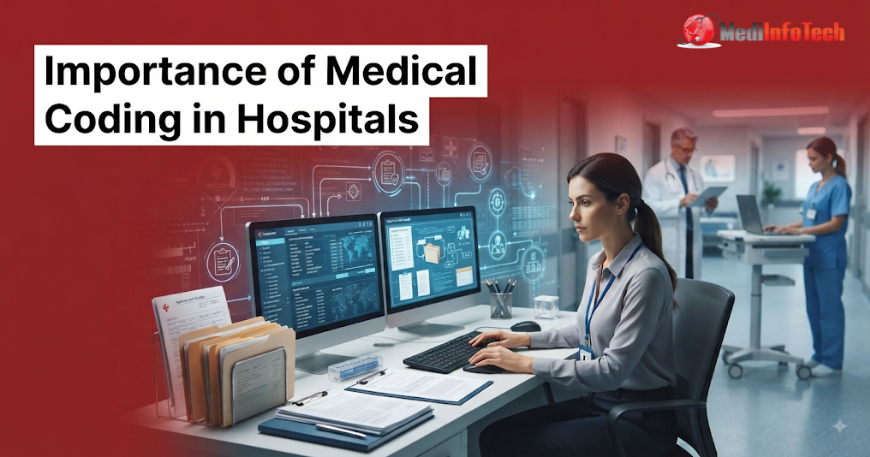
Medical coding is an essential part of modern healthcare administration. Every diagnosis, treatment, procedure, test, and medical service provided in a hospital must be accurately documented and translated into standardized medical codes. Our Top Medical Coding Training Course. These codes help hospitals manage billing, insurance claims, patient records, reporting, and compliance efficiently.
The importance of medical coding in hospitals goes far beyond assigning codes to medical procedures. Accurate coding creates a connection between clinical documentation and healthcare administration. It ensures that the services provided to patients are properly represented in medical records and financial transactions.
What is Medical Coding and Why is it Important in Hospitals?
Medical coding is the process of converting information from patient medical records into standardized alphanumeric codes. Professional medical coders review clinical documentation and identify relevant diagnoses, procedures, treatments, and services before assigning the appropriate codes.
Hospitals generate a significant volume of medical information every day. Without a standardized coding system, managing this information for billing, insurance, reporting, and analysis would be challenging.
The importance of medical coding in hospitals can be understood through several key areas:
- Accurate medical documentation: Coding helps represent diagnoses and healthcare services consistently.
- Efficient billing: Correct codes support accurate preparation of hospital bills and claims.
- Insurance reimbursement: Insurers use coded information to evaluate healthcare claims.
- Regulatory compliance: Proper coding helps hospitals follow applicable coding and documentation requirements.
- Healthcare reporting: Coded information can be used for operational and statistical reporting.
- Revenue cycle management: Accurate coding can help minimize avoidable claim delays and payment issues.
Medical coding therefore plays a critical role in connecting healthcare delivery with administrative and financial processes.
Key Benefits of Medical Coding in Hospitals
1. Supports Accurate Medical Billing
One of the primary benefits of medical coding is its role in accurate billing. Hospitals provide numerous services, including consultations, diagnostic tests, surgeries, procedures, and inpatient care. Each service needs to be represented correctly in the billing process.
When coding accurately reflects the physician’s documentation, hospitals can prepare claims with appropriate information. This helps reduce errors caused by incorrect, incomplete, or inconsistent coding.
Professional coding support can also help healthcare organizations identify documentation gaps before claims are submitted, supporting a smoother billing workflow.
2. Helps Reduce Claim Denials
Claim denials can affect hospital revenue and increase administrative workload. Incorrect codes, missing information, documentation inconsistencies, and coding errors can contribute to claim problems.
A structured medical coding process helps identify coding-related issues and supports accurate claim submission. Experienced medical coders carefully review documentation and apply appropriate coding guidelines to reduce preventable errors.
For organizations looking to strengthen their revenue cycle, exploring dedicated medical coding services can be a valuable step toward improving coding accuracy and workflow efficiency.
3. Improves Healthcare Data Management
Hospitals handle large quantities of patient and clinical information. Standardized medical codes Importance of Medical Coding in Hospitals. Make this information easier to organize, retrieve, analyze, and report.
Accurate coding can help hospitals use healthcare data for purposes such as:
- Monitoring service utilization
- Analyzing treatment patterns
- Supporting quality reporting
- Managing hospital resources
- Evaluating operational performance
- Preparing healthcare statistics
Reliably coded data can provide healthcare administrators with a clearer understanding of hospital activities and service trends.
4. Supports Regulatory and Coding Compliance
Healthcare organizations must maintain accurate documentation and follow applicable coding rules and standards. Inaccurate coding can create compliance concerns and may result in billing discrepancies or audit-related issues.
Professional medical coding teams stay informed about relevant coding guidelines and documentation requirements. Their knowledge can help hospitals maintain consistent coding practices while reducing the risk of avoidable errors.
How Medical Coding Improves Hospital Revenue Cycle Management
Revenue cycle management involves the financial processes that begin when a patient receives healthcare services and continue through billing, claim submission, payment, and account resolution. Surgery Coding Classes in Hyderabad Medical coding is an important component of this process.
Accurate coding helps ensure that the services documented by healthcare professionals are appropriately represented during billing. When coding errors occur, claims may require corrections, face delays, or be denied.
A reliable coding workflow can support the following:
Better documentation → Accurate coding → Cleaner claims → Fewer avoidable errors → More efficient reimbursement
However, medical coding should not be viewed only as a billing function. It also contributes to the accuracy and usability of clinical and administrative healthcare information.
Hospitals can strengthen their overall processes by combining qualified coding professionals, effective quality checks, appropriate technology, and regular training.
For healthcare organizations seeking broader support for their medical coding workflow, Healthcare Coding Solutions can help address coding requirements while supporting operational consistency.
Role of Professional Medical Coders in Hospitals
Medical coders play an important role in reviewing clinical documentation and converting relevant information into standardized codes. Importance of Medical Coding in Hospitals.Their responsibilities require attention to detail, knowledge of medical terminology, familiarity with coding guidelines, and an understanding of healthcare documentation.
A professional medical coder may work with documentation related to:
- Patient diagnoses
- Surgical procedures
- Laboratory services
- Radiology and imaging
- Outpatient services
- Inpatient hospital care
- Emergency department services
- Physician consultations
- Therapeutic procedures
Coders must carefully interpret documentation rather than simply assigning codes based on assumptions. The accuracy of their work depends heavily on complete and clear clinical documentation.
Quality-focused coding teams may also perform reviews to identify potential inconsistencies and improve coding accuracy. This makes professional expertise an important part of an effective hospital coding process.
Medical Coding and Better Healthcare Administration
The importance of medical coding in hospitals also extends to healthcare administration. Standardized coded information helps administrative teams manage information consistently across departments and systems.
When coding data is accurate, hospitals can use it to support financial analysis, service planning, operational reporting, and healthcare management.
For example, administrators can review coded data to understand which services are being utilized most frequently or identify areas where documentation and billing workflows may need improvement.
Accurate coding can therefore contribute to more informed administrative decision-making while improving communication between clinical and administrative teams.
Hospitals can also benefit from integrating coding with related processes such as medical billing, claims management, documentation review, and revenue cycle operations.
Organizations interested in strengthening these processes can explore medical billing and Coding Support for professional assistance tailored to healthcare requirements.
Why Hospitals Need Accurate Medical Coding
stages of the healthcare administrative process. Importance of Medical Coding in Hospitals. An incorrect diagnosis code or procedure code can create inconsistencies between clinical documentation, billing information, and insurance claims.
Accurate coding helps hospitals maintain:
- Consistent patient records
- Appropriate billing information
- Better claims quality
- Reliable healthcare data
- Improved administrative efficiency
- Stronger compliance practices
- More organized revenue cycle processes
As healthcare systems become increasingly data-driven, the demand for reliable and accurate medical coding continues to grow. Hospitals need coding professionals who understand both medical terminology and the standards governing healthcare coding.
Conclusion
Looking for reliable medical coding support for your hospital or healthcare organization? Importance of Medical Coding in Hospitals.
Contact Medi Info Tech today to discuss your requirements and discover professional medical coding solutions designed to support accuracy, efficiency, and better healthcare administration.
